Home mining,
at a glance.
Monitor your hardware, track solo pool stats across BTC and BCH, and control your miners from the same app.
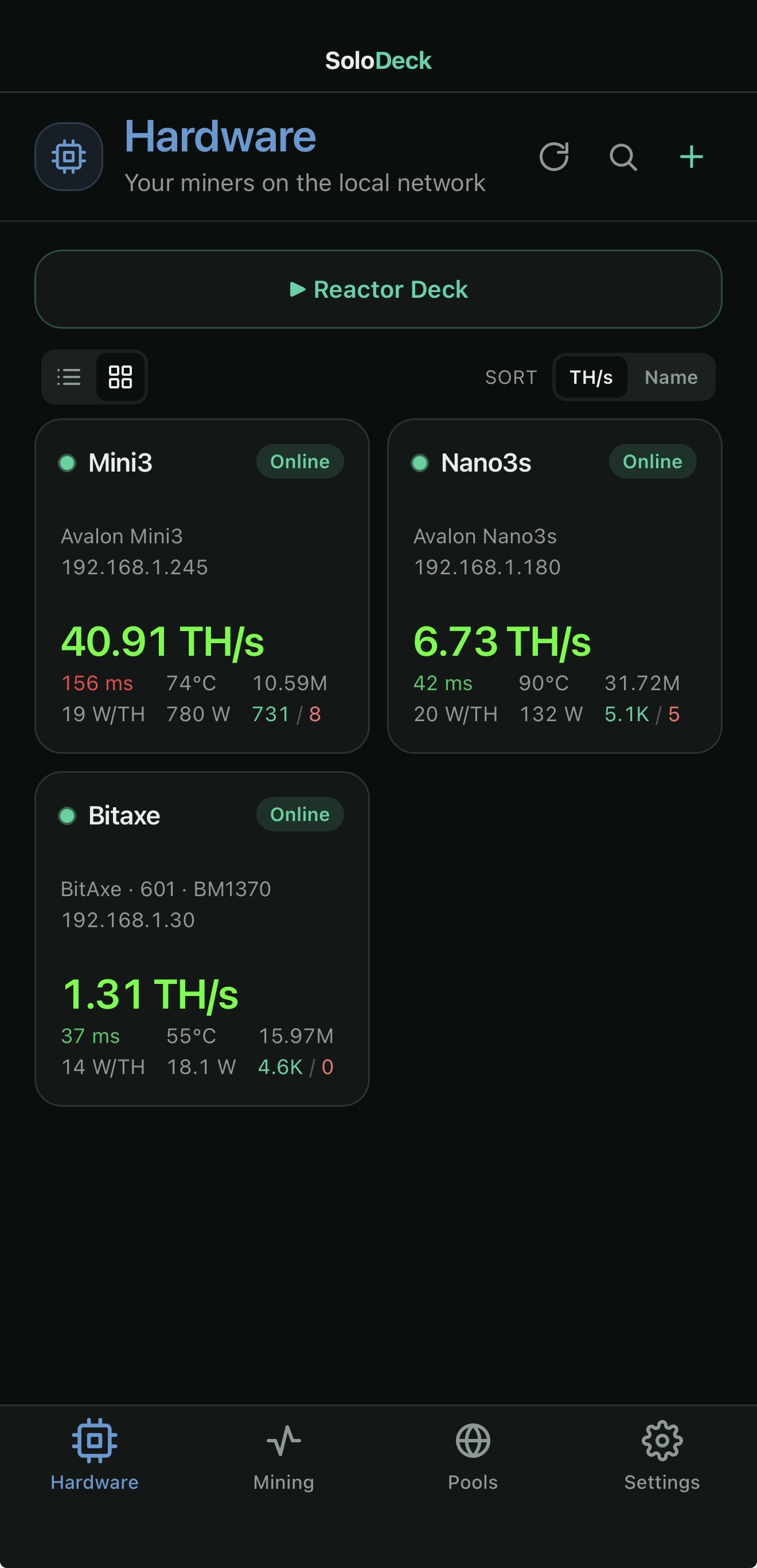
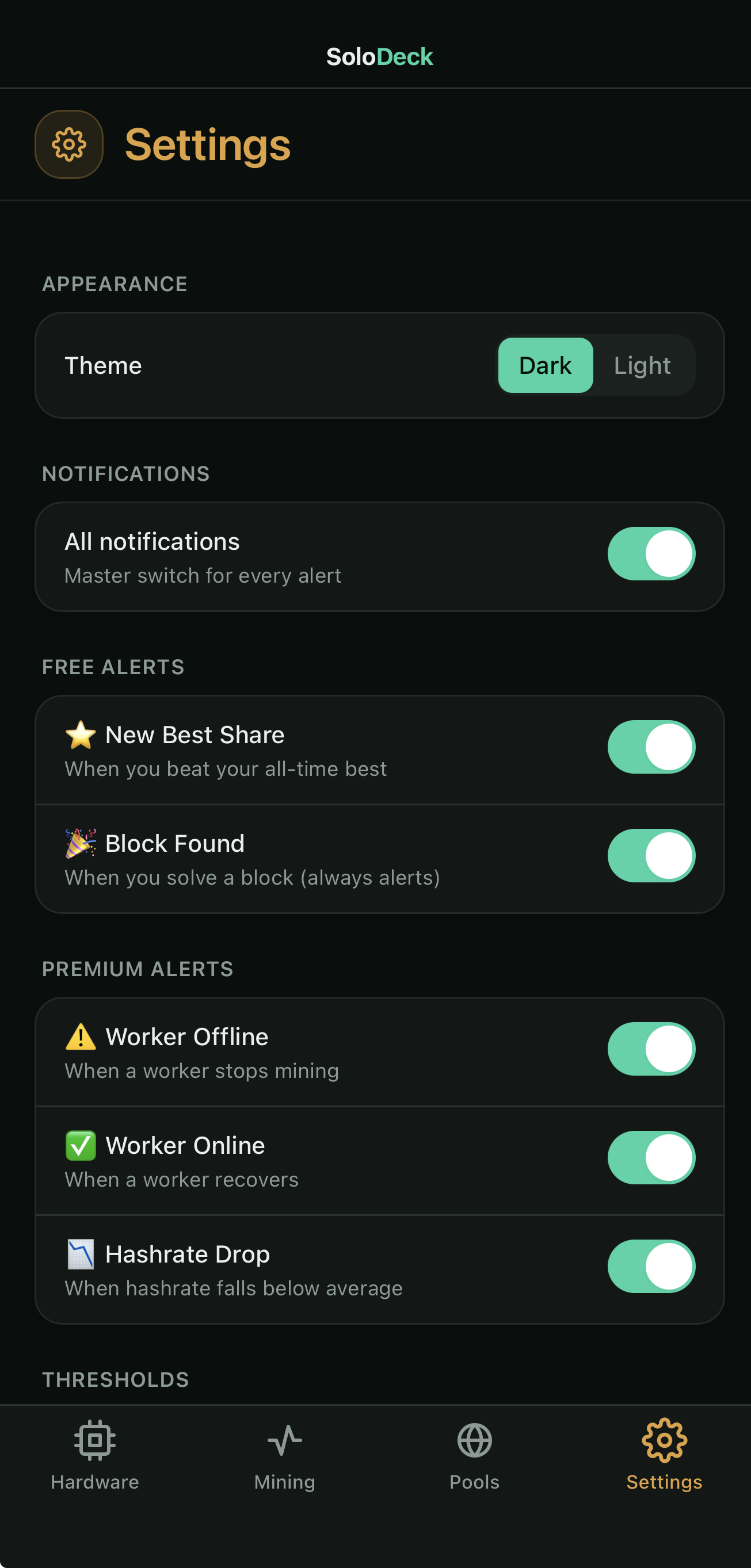
The home fleet: live hashrate, temps and status per miner.
Made for small setups.
A couple of ASICs, a few solo pool wallets, and a phone to watch them with.
-
1.1
Change Avalon work modes remotely
Switch between Heater, Mining and Night and set the power level without touching the miner. You can also set a Nano's light, turn the screen on or off and pick what it shows, and read how close the air filter is to needing a clean.
Modes: Heater / Mining / Night · Levels: Eco / Super -
1.2
Change pools without leaving the app
Point any miner at a new pool from your phone, or move it onto its backup pool in one tap. Works on AxeOS, Avalon, ThorOS, Harlo-OS, ZyberOS and the GekkoScience KBox. A Harlo-OS rig splits its hashrate across up to four pools instead, so it has no backup to move to.
-
1.3
Update firmware over the air
NerdQAxe, NerdOCTAXE, Hammer and Harlo-OS miners update from their page in the app, and a banner tells you when an update is out. The miner downloads the release itself; you tap Install.
-
1.4
Auto-discovery on your LAN
SoloDeck scans your network and finds your Bitaxe / NerdQAxe (AxeOS) units, Avalon miners, Hammer boxes on ThorOS, GekkoScience KBoxes, Zyber miners on ZyberOS and any rig running Harlo-OS, so you never have to hunt for IP addresses.
-
1.5
Rigs that change address
When the router hands a miner a new IP address, after a power cut say, SoloDeck looks for it on your network while the app is open and moves it across with its history. No static IPs needed. Works on AxeOS, Avalon and ThorOS miners.
-
1.6
Miner not listed? Help us add it
SoloDeck can ask a miner it doesn't know yet what it knows, take out your wallet, Wi-Fi name and other private details, and hand you a file to send us. Nothing on the miner is changed.
-
1.7
13 pool families supported
CKPool, AtlasPool, Braiins Solo, Mineshop, Blitzpool, Bitaxe.de, Parasite, Public-Pool, SoloHash, HeliosPool, SoloPool, Molepool and NexusPool.
-
1.8
Best share & block odds
Your best share measured against live network difficulty, so you can see how close you came to a block.
-
1.9
Four push alerts, from Block Found to Worker Online
Pushed to your phone the moment they happen.
Block Found / Best Share / Worker Offline / Worker Online -
1.10
Home-screen widgets
Live hashrate and best share on your home screen, plus a banner when one of your miners solves a block.
-
1.11
On iPad too
A layout made for iPad, with the list and the miner, wallet or pool you picked side by side. It's the same app, so Premium covers your iPhone and your iPad.
-
1.12
A year of history
Charts hold 24 hours for everyone and up to a year on Premium, and the whole record exports to a text file you can open in a spreadsheet.
-
1.13
What your rigs cost to run
Put in what you pay per kWh and SoloDeck estimates the running cost from the wattage your miners report. Add a smart plug and the figure stops being an estimate: it reads at the wall, so the power supply's losses are in it, and the plug keeps counting while the app is closed.
-
1.14
Read a miner's log without a browser
Record the log off a Bitaxe, NerdQAxe or Hammer and export it with the model, firmware, clock and temperatures attached, ready to send to whoever sold you the device.
-
1.15
Move to a new phone
Write your setup to a file and restore it on the new one. Passwords aren't in the file.
-
1.16
Hide addresses before a screenshot
Two switches in Settings hide your wallet addresses and your miners' network details, meaning IP and MAC addresses and Wi-Fi names, for when you post a screenshot.
Mine to your own node.
SoloDeck reads Bitcoin Core and a self-hosted Public Pool straight off your own box, over your own network. It doesn't go through a pool site, or through us.
-
2.1
Node status
Chain tip, peers, mempool size and the current fee bands, read from your node's RPC.
-
2.2
Workers on your pool
Every miner connected to your Public Pool, with its hashrate trace, best share and last-share time.
-
2.3
What the next block is worth
Subsidy plus the fees sitting in your own mempool, and your odds of finding it at the hashrate you're running.
-
2.4
A block found while the app was shut
SoloDeck keeps track of the last block your pool solved, so one found overnight is still waiting when you open it.
-
2.5
Credentials stay on the phone
Your RPC details are held in the iOS keychain and never sent to a server. The node tab only ever talks to your box.
Works with: Bitcoin Core / Knots · Umbrel or your own build · Public Pool

Chain tip, peers, next block reward.

Every worker on your own pool.
Part of Premium. Setup takes an address and a password, and the FAQ shows you how to connect it.
Measure the power at the wall.
A miner reports the power its firmware thinks it's drawing, which leaves out what the power supply loses. Put a metering smart plug in front of your rigs and SoloDeck reads the real figure from that.
-
3.1
Shelly, read straight off the plug
Plug-shaped Shellys that meter, Gen2 and newer: Plus, Pro, Gen3 and Gen4. The scan that finds your miners finds these too, so there's nothing to pair.
-
3.2
Any Tasmota plug with power monitoring
Tasmota is one firmware, so a metering plug running it answers the same way whoever made it. The same scan finds it.
-
3.3
Anything Home Assistant already meters
Tapo, Zigbee sockets, a Shelly EM: if Home Assistant reads it, SoloDeck can read it through Home Assistant. Give SoloDeck the address and a long-lived token, then pick your plug from the list.
-
3.4
One plug for several rigs
Three rigs on one extension need one plug. Tick the rigs behind it and SoloDeck counts that outlet's electricity once for all of them.
-
3.5
Plugs we've tested
One for each route above, each run on the bench with real miners behind it.
Verified: Shelly Plus Plug UK · Local Bytes LB-PLUG-PM-UK-1, on Tasmota · Tapo P110, through Home Assistant -
3.6
What SoloDeck can't read
SoloDeck reads one outlet per plug, so on a metering power strip it only reads the first. Gen1 Shellys use an older API and aren't supported. The Shelly EM line has no switched outlet, so the scan leaves it out; read one through Home Assistant. A plug with a web password can't be read directly either, so clear the password or use Home Assistant.

Measured and estimated, kept apart.

Both routes, on the miner's own page.
Part of Premium. The FAQ covers what a plug adds and how to connect one.
Up and running in a few minutes.
There is nothing to install on the miners and no account to sign up for. Point SoloDeck at what you already run.
-
4.1
Connect your miners and pools
Let SoloDeck scan your LAN for ASICs, then add your solo pool wallets across BTC and BCH.
-
4.2
SoloDeck builds your dashboard
Hardware, pool stats, hashrate trends and fleet health are organised into one view built for the phone.
-
4.3
Watch, get alerted, respond
Spot a dropped worker, change a pool or switch a work mode from wherever you happen to be.
Why a phone app and not another web dashboard.
The miners sit on your home network, in a spare room or the garage, and you're not always there. SoloDeck is built for checking on them from wherever you are.
-
5.1
Everything in one place
No more hopping between pool sites and miner web UIs to piece together what's going on.
-
5.2
Visibility while you're away
Status at a glance plus push alerts, so you hear about a fault without having to go looking.
-
5.3
Made for home setups
Works the same for one Bitaxe or a shelf of Avalons on solo pools, and skips the farm-scale telemetry you'd never look at.
-
5.4
Fix things from the app
A problem shouldn't mean opening a laptop and SSH. Change pools and settings right in the app.
What you can watch.
All of it pulled straight from your miners and pools, refreshed live.
Live, 1-hour and 24-hour rates per miner and per wallet, and charts going back a year on Premium.
Your closest hash to a block, scored against current network difficulty.
Per-worker online/offline, last-share time and individual hashrate.
ASIC temperature, J/TH, and reject and hardware error rates where the hardware reports them.
Pool hashrate, connected miners, fees, blocks found and last-block height.
Per-coin difficulty and price for BTC and BCH, refreshed automatically.
Designed for the ten-second check.
Big numbers, clear status, nothing buried in menus.
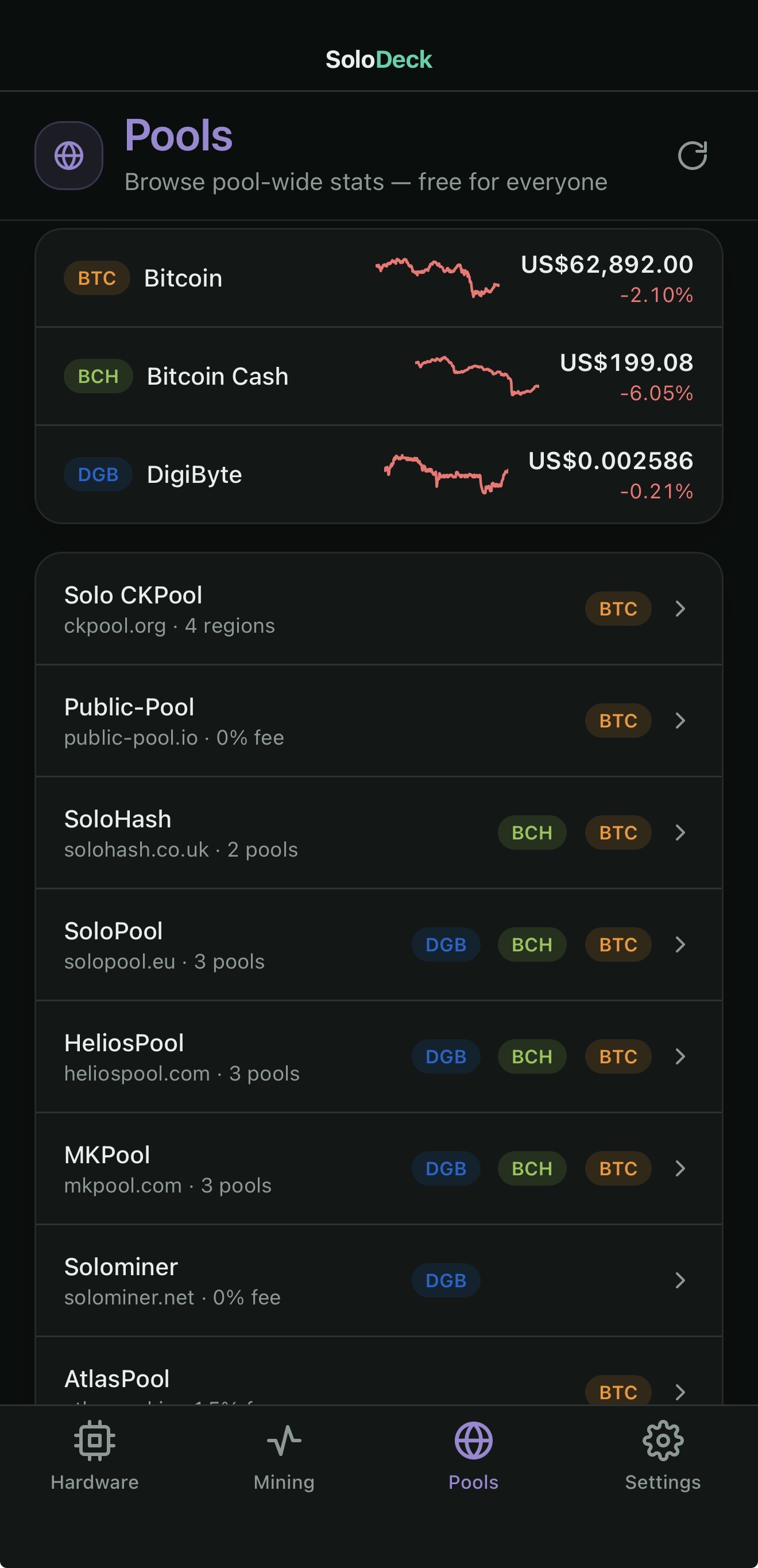
Every solo pool in one list.
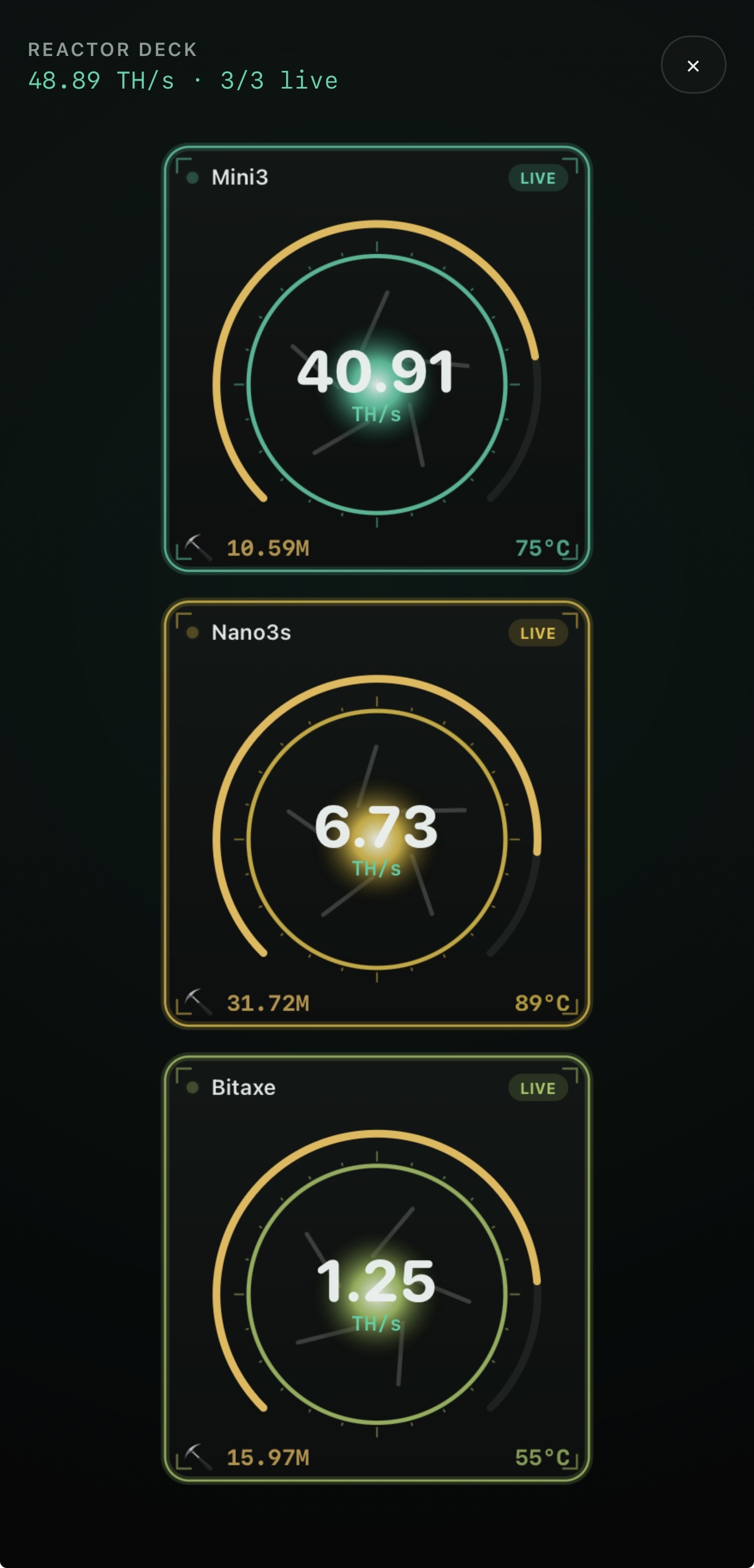
Your fleet, live.
Pick the ones you want.

The list and the page you picked, side by side.
Common questions.
If yours isn't here, email support@solodeck.app and you'll get a reply from a person.
What does SoloDeck monitor?
Your home ASICs (Bitaxe, Gamma Hex included, NerdQAxe and Naja Duo on AxeOS, Avalon, Hammer on ThorOS, the GekkoScience KBox, Zyber on ZyberOS, and any rig running Harlo-OS) on your LAN, plus your solo pool wallets across BTC and BCH. It tracks hashrate, best share and block odds, worker status, temperatures, pool stats and network difficulty.
My miner isn't listed. Can you add it?
Send us its readings and we'll work on it. In the app, tap + on the Hardware tab, then Miner not listed? Help us add it, under the Add device button. The network scan has the same button. If SoloDeck already reads your miner but gets its name or a stat wrong, use Send readings on the miner's page instead.
SoloDeck asks the miner what it knows, only reading and never changing anything, then takes out your wallet, passwords, Wi-Fi name, serial numbers and network addresses before it writes the file. Nothing is uploaded: the share sheet opens, and you send the file to support@solodeck.app. It's free.
Does it support multiple pools?
Yes. SoloDeck reads thirteen pool families and shows them all in one place; the full list is in the Capabilities section. More will be added over time. If you run a pool, or want yours added, here is what SoloDeck needs from its API.
Is it for home miners?
Yes, and only for home miners. It's built for hobbyists running a handful of ASICs at home on solo pools, not for farm-scale operations.
Can I use it on iPad or Android?
SoloDeck is on the App Store for iPhone and iPad, and needs iOS or iPadOS 15 or later. On an iPad it puts the list and the page you picked side by side.
It's one app, so Premium covers both with the same Apple ID. If it doesn't show on the second device straight away, open the Premium screen and tap Restore Purchases.
Android is planned, but there's no date for it yet.
Does it send alerts? How do they work?
Yes. They're cloud-delivered push notifications, so they reach you even when the app is closed. Four event types: Block Found, New Best Share, Worker Offline and Worker Online. Block Found and Best Share are free; the other two are part of Premium. There's a page on how alerts work with the timing and the pool details.
How do I connect SoloDeck to my own Bitcoin node?
Open the My Bitcoin Node tab and fill in five fields. It works with any Bitcoin Core or Knots node whose RPC answers on your own network, Umbrel or a build of your own, sitting behind a self-hosted Public Pool.
The address is your box's address on your home network, and it's the same one for both the pool field and the node field. Your router's device list has it, so does the Umbrel dashboard.
The pool port is whatever serves your pool's own web page: 2019 on Umbrel's Public Pool, 3334 if you installed it by hand. The node port is Bitcoin Core's RPC, usually 8332.
On Umbrel, the RPC user and password are in the Bitcoin Node app's connection details, the ones it shows you for connecting wallets. The user is normally umbrel and the password is long and random, so paste it. Reinstalling the Bitcoin app generates a new one. Don't look in bitcoin.conf. It stores a hash of the password, never the password.
To reach it from outside the house, set up a Tailscale subnet route and keep entering your normal home address rather than a Tailscale 100.x address.
Your credentials are held in the iOS keychain on your phone and are never sent to us. Premium.
What does a smart plug add?
Without one, SoloDeck uses the wattage each miner reports. That's what the firmware thinks it draws, and it leaves out what the power supply loses, so it reads a little under the wall. A metering plug measures at the socket, so the losses are in the figure.
A plug also covers the hours the app was closed. Without one, SoloDeck averages the draw it saw and carries it across the time it didn't, and the app marks that figure as an estimate. A plug keeps its own energy counter, so SoloDeck reads the real total the next time it looks.
Cost is worked out from the energy when you look, so changing your kWh price re-prices the whole history. On a night tariff, set both rates and their hours, and each stretch is priced at the rate that applied.
Plug reading and the cost history are Premium. Which plugs work is in the smart plugs section.
How do I connect a smart plug?
A Shelly or Tasmota plug needs no pairing. Run the scan on the Hardware tab and the plug appears under Smart plugs at the bottom of the list. Tap it, tick every rig plugged into it, and SoloDeck starts counting. Plugs that don't meter power aren't listed.
For anything else, use Home Assistant. Add a Home Assistant meter and give it the server's address (usually port 8123) and a long-lived access token. To make the token, click your name at the bottom left in Home Assistant, then Security, then Create token. SoloDeck lists the plugs Home Assistant can see: pick yours, then its power sensor and its kWh total. The token is stored in the iOS keychain.
Before you buy: SoloDeck reads one outlet per plug, so on a metering power strip it only reads the first. And a Shelly or Tasmota with a web password can't be read directly; clear the password or go through Home Assistant.
How do the charts work?
SoloDeck records while it's open. Every refresh feeds the 24 hour chart, and the longer ranges keep one reading per 15 minutes so a year of them still fits on your phone. Nothing is recorded on a server for you.
Time the app spent closed leaves a hole in those readings. The line draws straight through so the chart stays easy to read, and the caption under it tells you how much was actually recorded: as hours and minutes on the 24 hour chart, and as a share of the range on the longer ones. The average beside it only uses the recorded stretches, not the gaps.
24 hours is free and stays on your phone. The 7D, 30D and 1Y ranges are Premium, and they fill from the day you switch them on, so a new subscriber's year is empty at first.
A fleet total only counts the rigs that answered. If two miners miss a refresh, that point would read as a crash that never happened, so it's dropped and the line carries on past it. Switching a rig off for good is a real change, and that stays on the chart.
Premium can export the whole history to a text file from Settings.
How is fleet efficiency worked out?
The Efficiency figure on the Fleet page is the fleet's total watts divided by its total hashrate. Each rig counts in proportion to the hashing it does. Averaging the rigs' own J/TH figures would let a small rig count as much as a big one.
Take an Avalon Q doing 90 TH/s on 1,674 W (18.6 J/TH) and a Bitaxe doing 1.2 TH/s on 18 W (15 J/TH). Together that's 1,692 W for 91.2 TH/s, so 18.6 J/TH. An average of the two would say 16.8, as if the Bitaxe did half the work.
It uses the wattage each miner reports, so it leaves out what the power supplies lose. A rig that doesn't report its power is left out of both totals.
Do I need to be at home to check my miners?
Pool stats and alerts work from anywhere. LAN features like ASIC auto-discovery and direct miner control run while you're on the same network as your rigs.
There's a free way to make those work from anywhere too, and with an Umbrel it takes about 15 minutes to set up: follow the step-by-step guide.
What's free versus Premium?
Free covers one wallet, up to ten miners on your network, 24 hours of charts, Block Found and Best Share alerts, and the small widget.
Premium is $3.99/month, or $29.99/year with a 7-day free trial. It lifts both limits to unlimited, and adds the My Bitcoin Node tab, smart plug metering with what the fleet costs to run, a year of chart history with export, backup and restore, the other two alerts with custom thresholds and quiet hours, and the medium and large widgets.
Run a pool? Get it in SoloDeck.
SoloDeck reads thirteen pool families today. Adding another is a config entry rather than a rewrite, as long as your API can answer these questions.
-
9.1
Bitcoin or Bitcoin Cash
SoloDeck is SHA-256 only: BTC and BCH. Other coins are not planned, so a pool on another algorithm is a no from us rather than a maybe.
-
9.2
Stats looked up by payout address
JSON over HTTPS, no account and no login. Solo miners are identified by the address they mine with, so that address is the only key the app has.
-
9.3
Every worker, separately
Worker name, its own hashrate, and its own last share. A single total for the address cannot tell someone which of their four rigs stopped.
-
9.4
A last-share time that actually moves
Something that changes with every share, not an hourly bucket. Without it there is no honest way to tell a rig that is mining from one that was unplugged fifty minutes ago.
-
9.5
Best share difficulty
Current and all-time, per address and per worker. It is the number solo miners open the app for, and it is what the free Best Share alert is fired from.
-
9.6
Blocks found by an address
Height, time and reward, per address. It is what turns a block into a notification and a banner on someone's phone, which is the whole reason a solo miner keeps the app installed.
-
9.7
A rate limit that survives polling
Alerts mean your API gets polled on a schedule. One call that accepts a batch of addresses is ideal, and if you would rather key us, a key is fine; it stays on our server and never ships inside the app.
-
9.8
Readable without a browser
JSON, not a page to scrape, and no challenge that blocks a fixed user agent. Our requests identify themselves so you can allow-list or reach us.
SoloDeck/1.0 (+https://solodeck.app; support@solodeck.app) -
9.9
Your stratum addresses, confirmed
Host and port for each region or difficulty variant you run. The app puts them on your pool's page as one-tap copy buttons, and a wrong one breaks a real miner, so we only publish what you confirm.
Nothing. No fee either way, no contract, no integration work beyond the API you already run.
Your pool as a page in the app: their workers, best share, blocks found and your stratum endpoints, without a browser.
Block Found and New Best Share are pushed free to every user, on your pool as on any other.
A reply to an email, your stratum list confirmed, and a warning if the API ever changes shape.
If your API already does all of this, email support@solodeck.app and it can go in. If it does not, email anyway and you will get told exactly which part is missing. One pool already in SoloDeck added a batch endpoint after precisely that conversation, which is why it still works now that more people are watching it.
No promises on timing. SoloDeck is written by one person, so a pool goes in when its API is ready and there is an evening to do it in.
Your rigs, in your pocket.
On iPhone and iPad now, with Android planned for the future.
On iPhone and iPad · Android coming later
Keep SoloDeck independent.
I'm a home miner myself, and I built SoloDeck because I was tired of juggling a dozen pool tabs and miner web pages just to check on my rigs. It's a one-person passion project. Your wallets and rigs stay on your device, and if it earns a spot on your home screen, an on-chain tip helps fund the next build. Entirely optional.
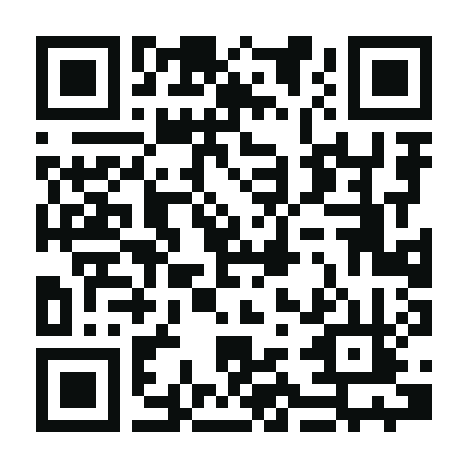
bc1q8e5ph7hnfqdtxnrxuhhxyt3gs4duslde7gts3h